In this article, a new dynamic online metasynthesis tool is proposed by the authors as a better approach to synthesizing the wealth of available knowledge in environmental science and related fields – to make finding, understanding, and updating science – more efficient and equitable for researchers, and reduce duplicated work, rediscovery of previously published ideas,Continue reading “How to Address Publication Overload in Environmental Science”
Author Archives: ecohydrolab
New Pub: Potentials for quantifying disturbance response with remote sensing technologies
This publication offers a focused review of how modern remote sensing platforms and sensors could advance our understanding of disturbance impacts and recovery across scales. Hwang, K., Harpold, A.A., Tague, C.L., Lowman, L., Boisramé, G.F.S., Lininger, K.B., Sullivan, P.L., Manning, A., Graup, L., Litvak, M., Lewis, G., Miller, K., Brooks, P.D., Barnard, H.R. (2023) SeeingContinue reading “New Pub: Potentials for quantifying disturbance response with remote sensing technologies”
On the expansion of integrated hydrologic models, and future challenges
In this new publication, recent advances to integrate new processes and systems into existing terrestrial hydrologic models are reviewed, and the significant challenges and opportunities that remain are highlighted. Brookfield, A.E., Ajami, H., Carroll, R.W.H., Tague, C., Sullivan, P.L., Condon, L.E. (2023) Recent advances in integrated hydrologic models: Integration of new domains, Journal of HydrologyContinue reading “On the expansion of integrated hydrologic models, and future challenges”
Bren Flash Talks
Tague team lab member Rachel Torres has been mentoring undergrad student Perla Nava as part of the Bren Environmental Leadership program, which will highlight undergraduate student achievements in the Summer Bren Flash Talks tomorrow from 1-4. Perla will be presenting the work she’s been doing using census data to map with tree data in SantaContinue reading “Bren Flash Talks”
Louis Graup presentation at EGU

Louis Graup presented his poster “The Signature of Snow Drought: A Spatially-Connected Approach to Understanding Forest Water Stress” recently at the EGU23 General Assembly meeting in Vienna, Austria. Also – pay a visit to Louis’s blog and see how he expresses hydrology in a rather artful way! Graup, L. and Tague, N.: The Signature ofContinue reading “Louis Graup presentation at EGU”
New tool for creating climate scenarios
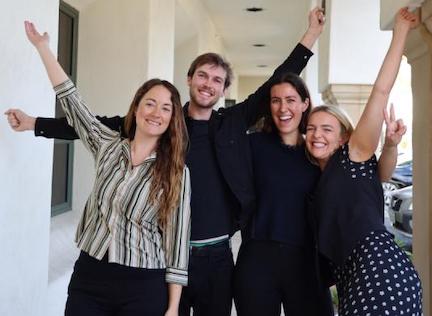
As part of the larger Moore Foundation’s Building Resilience to Wildfires initiative, a team of students in the Master of Environmental Data Science (MEDS) program produced a new climate tool for creating climate scenarios as their Capstone Project – “Automating Climate Scenario Creation for Wildfire Modeling“. The team created an interactive web application to efficientlyContinue reading “New tool for creating climate scenarios”
CUAHSI presentation

Dr. Naomi Tague presented “Some interesting things we know and don’t know about critical zone hydrology from a forest’s perspective” yesterday in the New Perspectives on Modeling Water in the Critical Zone section at the CUAHSI Biennial Colloquium in Tahoe City.
Congratulations Dr. Heckman!
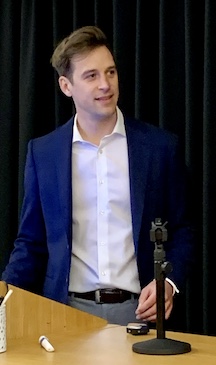
Congratulations to Chris Heckman on successfully defending his PhD dissertation last week! Chris has been a valuable member of & has made substantial contributions to the Tague Team Lab over the course of his research. Well done Dr. Heckman!
Heckman PhD Dissertation Defense today
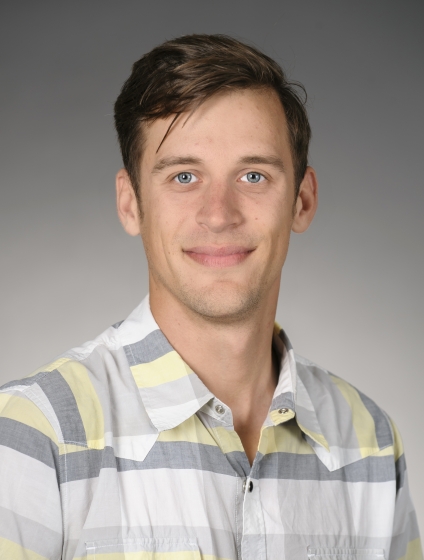
Chris Heckman will present his PhD dissertation defense today at 9:00 . “On the Importance of Roots to Eco-hydrology: The Effect of Plant Accessible Water Storage Capacity on Evapotranspiration”Advisor: Naomi TagueCommittee: Kelly Caylor, Samantha Stevenson Attend in person in Bren Hall 1424 or watch online with passcode roots.
Roadmap for future ecohydrological coupling research
New publication ‘Ecohydrological decoupling under changing disturbances and climate‘ synthesizes the literature on post-disturbance ecohydrological coupling and develops a framework of testable hypotheses to provide a roadmap for future research. McDowell, N., Anderson-Teixeira, K., Biederman, J., Breshears, D, Fang, Y., Fernández de Uña, L., Graham, E., Mackay, D., McDonnell, J., Moore, G., Nehemy, M., Stevens-Rumann,Continue reading “Roadmap for future ecohydrological coupling research”
 The Tague Team Lab