
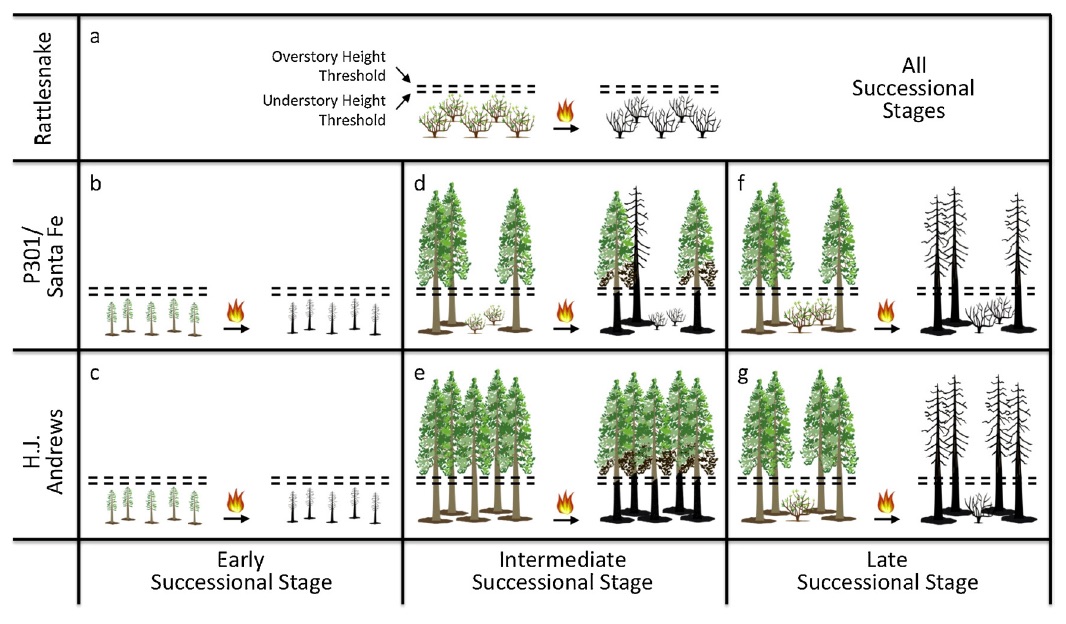
In this new publication in Ecological Modelling, the authors address the relationship between ecohydrology and wildfire and the representation of fire effects on vegetation carbon in ecohydrologic models, which requires a fully coupled modeling approach where wildfire and its effects co-evolve with ecohydrologic processes. Here they present the integration of a fire-effects model that is coupledContinue reading “New publications on modeling the effects of fire on vegetation”
Category Archives: Publications
New Publication: does forest thinning enhance the activity & growth of remaining trees?

In this new publication, the authors conducted a large-scale thinning experiment in a semi-arid pine afforestation in the Yatir forest, located at the northern edge of the Negev desert, Israel. RHESSys was also used to upscale tree-scale measurements. Tsamir, M., Gottlieb, S., Preisler, Y., Rotenberg, E., Tatarinov, F., Yakir, D., Tague, C., Klein, T., StandContinue reading “New Publication: does forest thinning enhance the activity & growth of remaining trees?”
New WRR Publication

In this new publication, authors Gabrielle Boisrame, Sally Thompson, Naomi Tague, and Scott Stephens use RHESSys to look at the hydrologic response of a restored fire regime in a basin within Yosemite National Park, California. Boisrame, G.F.S, Thompson, S.E., Tague C., Stephens, S.L. (2019) Restoring a Natural Fire Regime Alters the Water Balance of aContinue reading “New WRR Publication”
Tague presentation at Gordon Conference

Naomi Tague recently presented “Animating Green Stuff in Hydrologic Models: Where We Are and What Is Next?” at the Gordon Research Conference – Catchment Science: Interactions of Hydrology, Biology and Geochemistry, Transcending the Uniqueness of Place in the Age of Big Data, June 23-28 at Proctor Academy in Andover, NH.
New Publication -investigating forest thinning and the influence of subsurface features on water use and regeneration

In this new publication in Frontiers, authors Naomi (Christina) Tague and Max Moritz highlight the importance of accounting for site-specific variation, such as soil water storage capacity, in assessing how fuel treatments may interact with ecosystem water use and drought vulnerability, and ultimately downslope impacts on streamflow. Tague, C.L., Moritz, M.A. (2019) Plant Accessible WaterContinue reading “New Publication -investigating forest thinning and the influence of subsurface features on water use and regeneration”
Eco‐hydrologic impacts of forest density reduction in seasonally dry regions
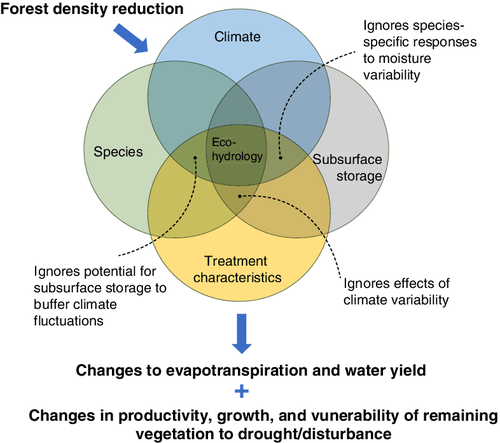
In their new publication ” The changing water cycle: The eco‐hydrologic impacts of forest density reduction in Mediterranean (seasonally dry) regions“, authors Tague, Moritz, and Hanan, offer an eco‐hydrologic perspective that considers both how much water trees use (hydrology) but also how water availability affects forest ecophysiology and health (ecology). This eco‐hydrologic perspective helps toContinue reading “Eco‐hydrologic impacts of forest density reduction in seasonally dry regions”
Congratulations Heckman

Congratulations to Tague Team PhD student Chris Heckman on successfully defending his PhD thesis proposal “Forest resiliency through a sub-surface lens”. Using the RHESSys model, Chris’s research explores how the vast variability in soil water storage across the Sierra Nevada will affect vegetation’s response to climate change.
Team Citeplan Bren MESM project

TagueTeamLab leader Naomi Tague and member Will Burke were advisors on the Bren MESM project for Team Citeplan, who spent the last year investigating the relationship between timber management, fire regimes, and wildfire behavior. Now, their findings and deliverables are being sent to a team of researchers at UC Berkeley and to officials at CALContinue reading “Team Citeplan Bren MESM project”
New Publication used RHESSys to develop a field sampling strategy

Estimates of snowmelt, root-zone soil moisture storage, and transpiration from the RHESSys model were used to design a soil moisture and sap flux field sampling strategy presented in the new publication “A top‐down soil moisture and sap flux sampling design of a rain‐snow transition mountain watershed”. Son, K., Tague, C. (2019) A top‐down soil moistureContinue reading “New Publication used RHESSys to develop a field sampling strategy”
Do hillslope‐scale processes matter to predicting global change?
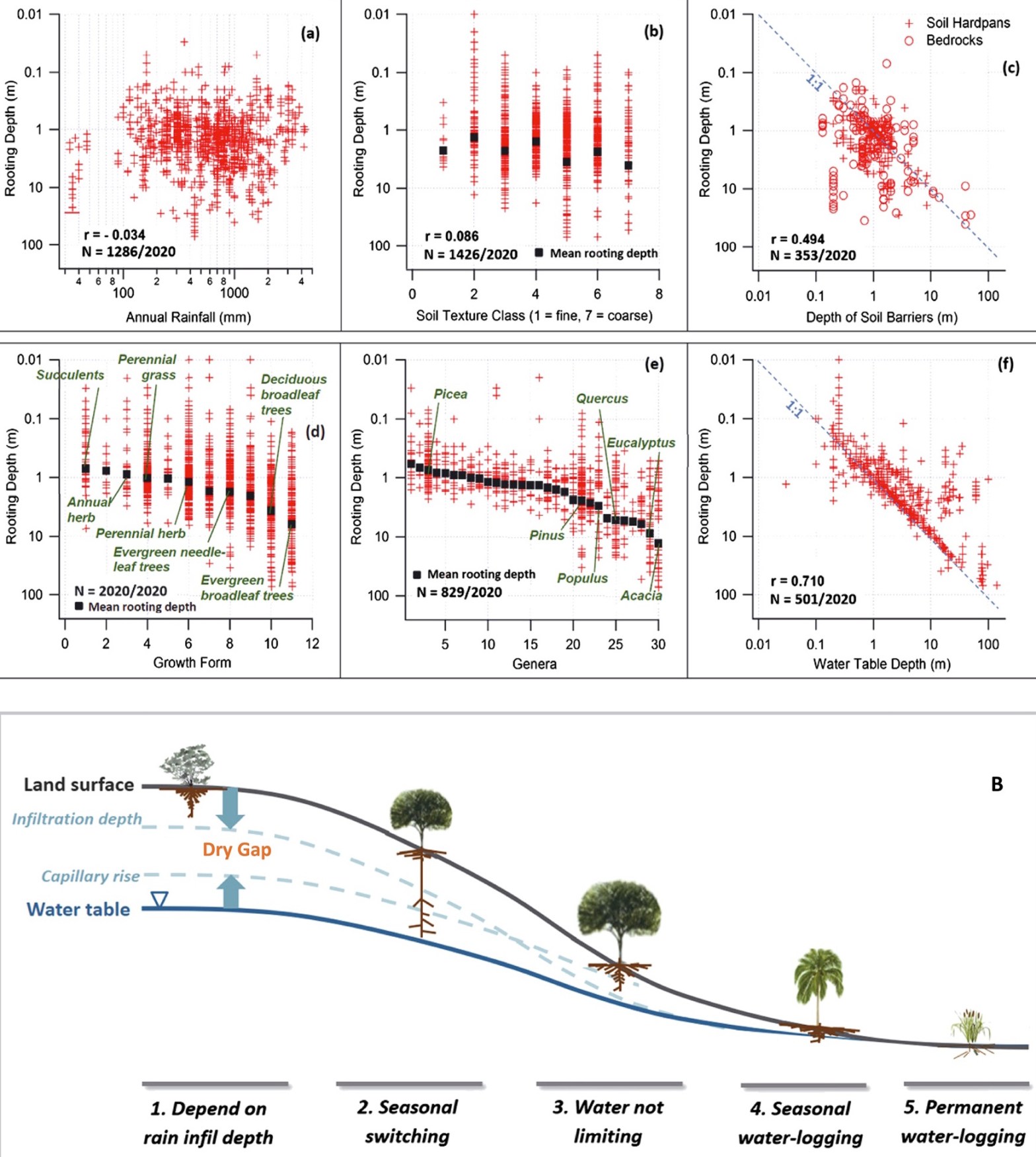
Hydrologists, Critical Zone scientists, and Earth System Model developers were brought together to address this question in the new publication “Hillslope hydrology in global change research and Earth system modeling”. Fan, Y., Clark, M., Lawrence, D. M., Swenson, S., Band, L. E., Brantley, S. L., et al. (2019) Hillslope hydrology in global change research and EarthContinue reading “Do hillslope‐scale processes matter to predicting global change?”
 The Tague Team Lab