Dr. Naomi Tague will be presenting at an event hosted by the Santa Barbara Center for the Performing Arts at The Granada Theatre on April 25, at 7:00 PM. Bren, the Community Environmental Council, the Santa Barbara Foundation, and the Santa Barbara Museum of Natural History are taking part in this town hall event in oder to begin a community conversation about the potential impacts of climate change on our community, and how to improve our readiness and response in policy and practice. Please join us for this free event – tickets are available at the door.
Tague lab part of a new multi-UC campus research grant

The Tague lab will take part in a three-year project to improve the projection of water resources under a range of future scenarios, titled “Headwaters to Groundwater: Resources in a Changing Climate,” led by UCSB Professor Jeff Dozier, and also includes researchers from Lawrence Livermore National Laboratory, UC Davis, UC Irvine, UCLA, and UC Merced.
Erin Hanan presenting at the Gaucho Grown Showcase
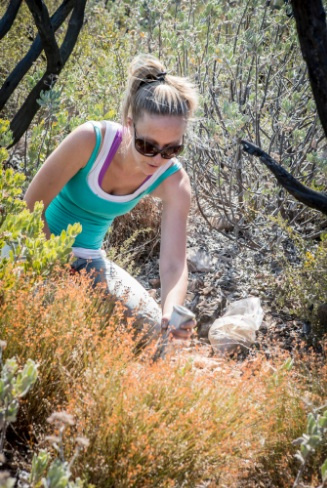
Postdoctoral scholar and Tague Team Lab member Erin Hanan, with UCSB Professor Dr. Andrew Plantinga, are presenting “What is the impact of Wildfire on our Ecology and Economy?” at the Gaucho Grown Showcase, a Gaucho Professional Network event, on April 28th.
New approach to model initialization of vegetation published
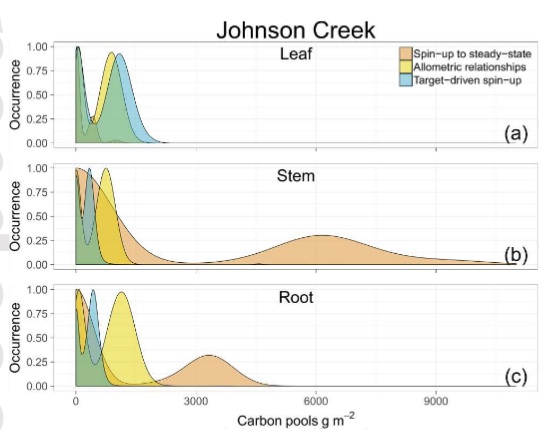
New publication from Tague Team Lab member Dr. Erin Hanan et al. about a new approach for initializing vegetation stores in a watershed model. Typical initialization methods such as spin‐up to steady state (which assumes uniform vegetation age across a landscape) or remote sensing with allometric relationships (which are species and region specific and do not account for the effects of local resource limitation) are evaluated along with this new method, which uses the mechanistic stability of model spin‐up to match spatially explicit targets established by remote sensing data. This new approach shows potential for improving biogeochemical projections, particularly in heterogeneous, disturbance‐prone watersheds.
Post Doc Opportunity
The department of physical geography and ecosystem science with the Lund University GIS Centre in Lund, Sweden is seeking a Post Doctoral researcher for a position in GIS and hydrological modelling.
Information about this opportunity can be found by following this link
Bren PhD Student Symposium
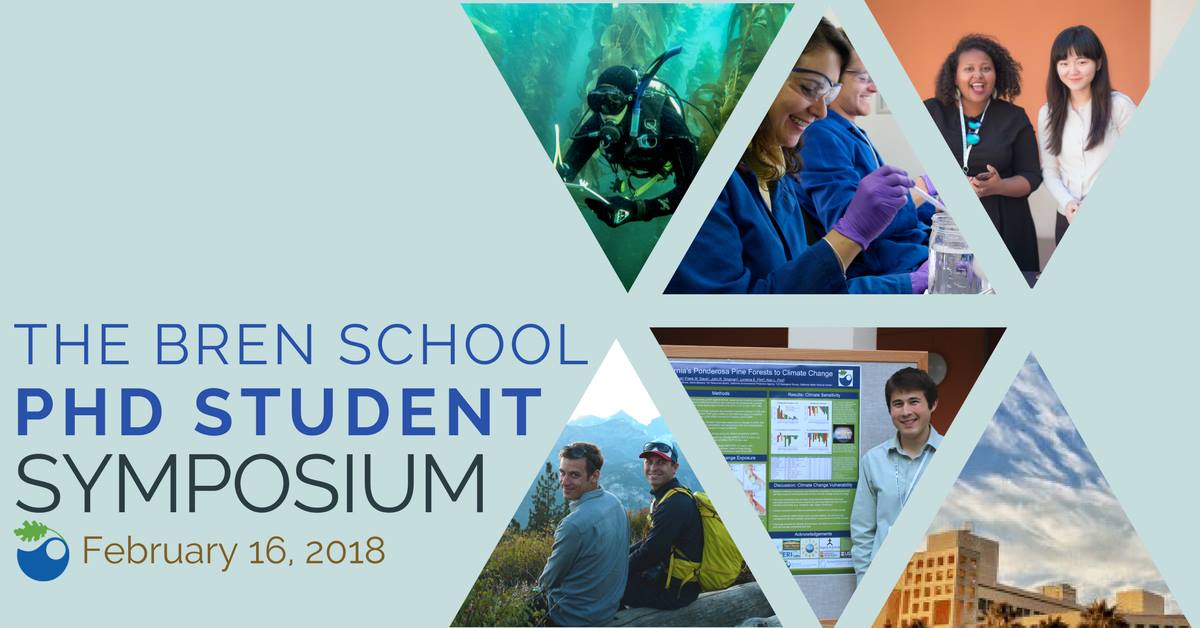
Tague Team Lab members Will Burke, Chris Heckman, and Rachel Torres will be taking part in the 2018 Bren PhD Student Symposium that will be held Friday, February 16, from 12 -4 in Bren Hall. They and other students will be making presentations about their research through talks and posters on a diverse variety of topics. The event is free and open to the public – RSVP appreciated for reception.
Will Burke: Characterizing Neighborhood Exchanges in Disturbed Landscapes
Chris Heckman: Plant Water Storage Capacity’s Role in the Interaction Between Climate and
Vegetation Productivity
Rachel Torres: The Impact of Urban Vegetation on Stormwater Management
Tague an instructor in CUAHSI’s fall 17 virtual university

Dr. Naomi Tague taught the module ‘Hydrologic Modeling for Hypothesis Generation and Scenario Development: Tools in R’ as part of the CUAHSI VIRTUAL UNIVERSITY SPECIAL TOPICS IN HYDROLOGY: CUAHSI SPECIALIZED ONLINE HYDROLOGY COURSES during the Fall of 2017.
Touching the Void: Hydrology community bands together to launch first multi-university graduate course
CUAHSI partnered with six universities nationwide to offer new topics in hydrology research.
Cambridge, Mass. – The first Virtual University was piloted in the Fall 2017 semester by six major universities across the U.S.
Undergraduate students have access to a wide-range of in-person and online courses, but graduate students have few to no online options. This is especially the case for graduate students in hydrology. To fill this void, the Consortium of Universities for the Advancement of Hydrologic Science, Inc. (CUAHSI) stepped in and launched the CUAHSI Virtual University in Fall 2017.
The CUAHSI Virtual University is a national online course, consisting of a diverse set of 4-week modules on highly specialized hydrology topics on recent research advances, including coastal hydrogeology, ecohydrology of groundwater dependent ecosystems, and use of drones and remote sensing applications. CUAHSI partnered with six universities for the Virtual University: Michigan State University, University at Buffalo, University of California-Santa Barbara, University of Delaware, University of Nevada-Reno, and University of Wisconsin-Madison.
The Virtual University is the brainchild of Dr. Steven Loheide, an Associate Professor in the College of Engineering at the University of Wisconsin-Madison and a Director on CUAHSI’s Board.
“With the virtual university model, students from each university can learn the most up-to-date content from leading faculty around the country who are developing the science they teach in their modules,” Loheide, said. “This puts a broad array of research breakthroughs of today into the hands of the hydrologists of tomorrow much sooner than is possible with non-collaborative models of graduate education where these new and emerging ideas have to work their way into the textbooks.”
Forty-five students from across the participating universities registered for the pilot course. Each student enrolled in modules of their choosing, and received course credit at their home university, which facilitated collaborations between instructors and students at different universities. “I thought it was really valuable and instructive to collaborate with and hear perspectives of other students from across the country who are working in very different systems from those we generally tend to work in at my home institution,” said Christine Albano, a student from the University of Nevada-Reno.
CUAHSI plans to continue the Virtual University in Fall 2018, expanding to eight modules.
“CUAHSI is pleased to be able to support the water-science community through this unique educational service,” said Dr. Jerad Bales, Executive Director of CUAHSI.
For more information on the Virtual University, please visit http://www.cuahsi.org.
#####
The Consortium of Universities for the Advancement of Hydrologic Science (CUAHSI) is a 501(c)3 nonprofit with the mission to advance water science by strengthening interdisciplinary collaboration, to empower the water-science community by providing critical infrastructure, and to promote education in the water sciences at all levels. For more information, please visit https://www.cuahsi.org/
New publication – carbon allocation representation in models

New publication just out in JAMES where RHESSys was used to compare carbon allocation strategies in different grassland sites: “Assessing the Impact of Parameter Uncertainty on Modeling Grass Biomass Using a Hybrid Carbon Allocation Strategy“.
Reyes, J. J., Tague, C. L., Evans, R. D., & Adam, J. C. (2017). Assessing the impact of parameter uncertainty on modeling grass biomass using a hybrid carbon allocation strategy. Journal of Advances in Modeling Earth Systems, 9. https://doi.org/10.1002/2017MS001022
Lab members talk about water issues
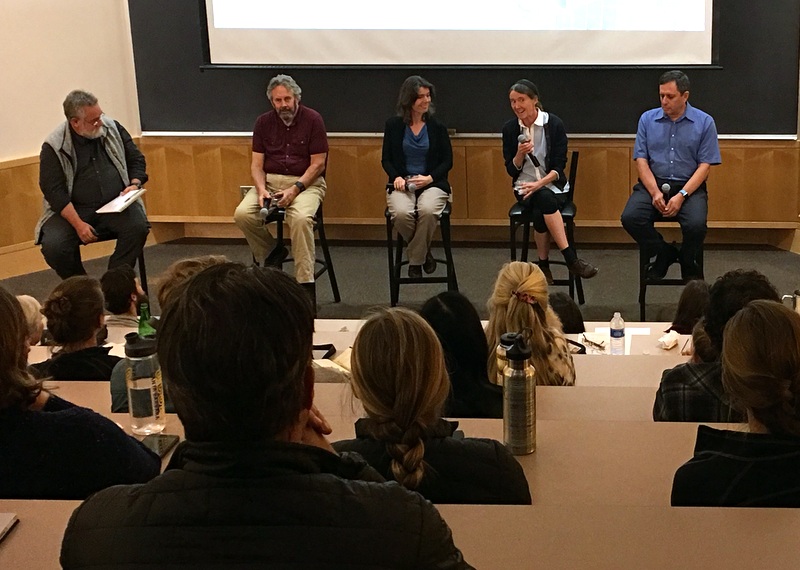
Naomi Tague took part as a faculty panel member at the “Lets Talk About Water” event last week, organized by Tague Team Lab members Ty Brandt and Kate Voss, who also gave flash talks of their research, along with lab member Chris Heckman. This campus and community wide water event, co-funded by CUASHI, ERI, and Bren, was designed to promote a better understanding of water issues in the west and share faculty and student research through four short films, a faculty panel discussion and PhD student flash talks, followed by a reception that allowed guests from the general public, students, and local environmental organizations & water practitioners to discuss water issues.


Lab members present at Fire Prediction Conference
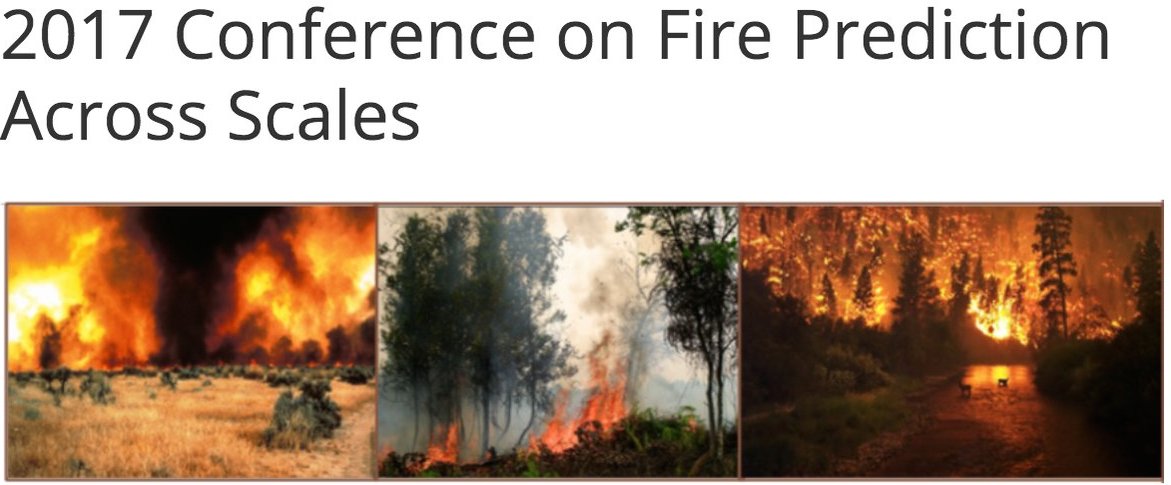
Last week, Tague Team Lab members Erin Hanan and Ryan Bart presented their research at the 2017 Conference on Fire Prediction Across Scales, a Columbia University Initiative on Extreme Weather and Climate event.
Bart’s presentation: Development of a coupled model for investigating the effects of forest management and climate on wildfire regimes in the western U.S.
Hanan’s presentation: Effects of fire suppression and climate change on wildfire activity in the Pacific Northwest
Hanan’s poster: Using remote sensing to account for disturbance history in process-based, carbon cycling models
 The Tague Team Lab