
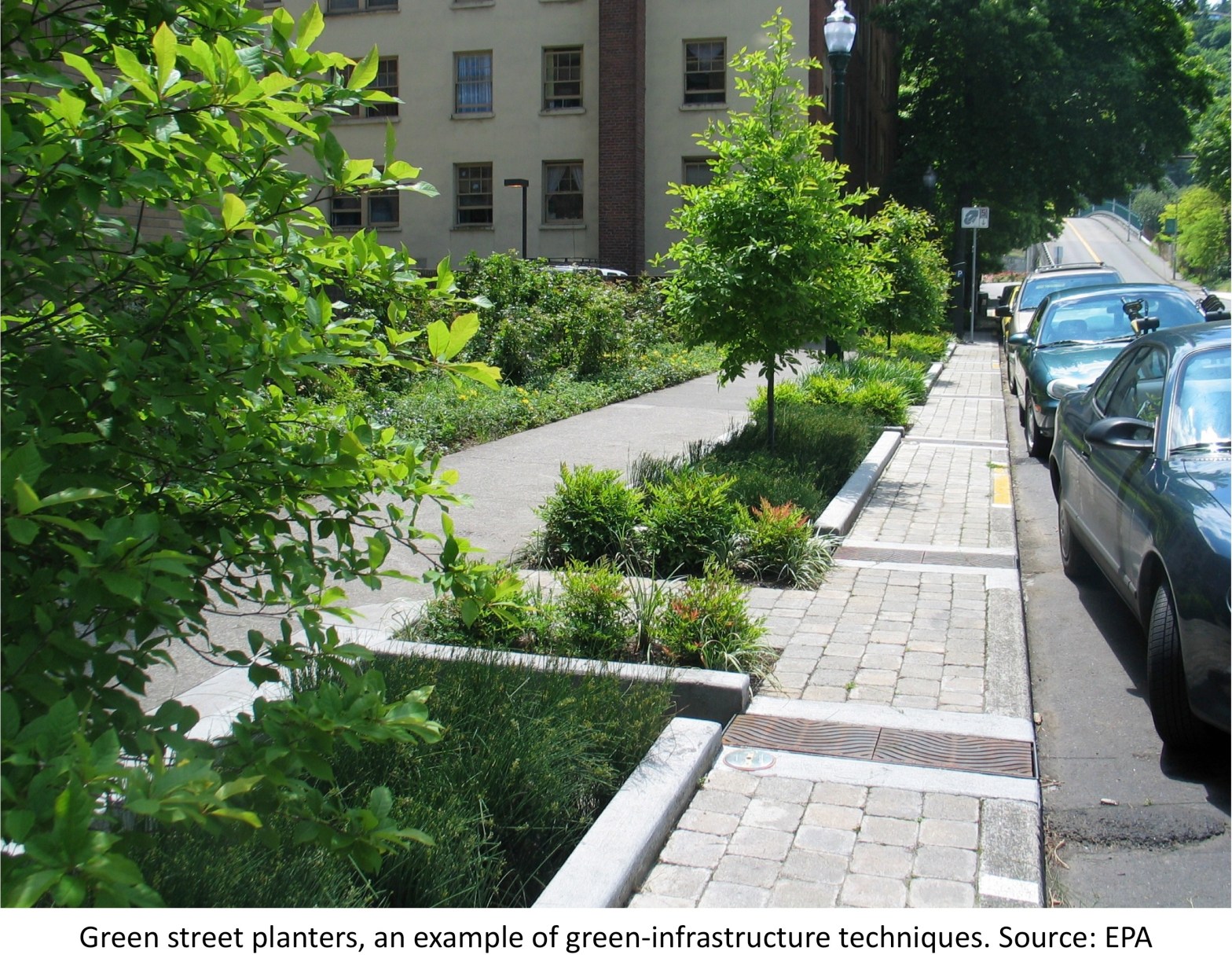
Dr. Anne Jefferson, assistant professor in the Department of Geology at Kent State – and friend of the Tague Team Lab and Tague collaborator -had a recent project on neighborhood scale green infrastructure retrofits featured as a two page spread in the March issue of Civil Engineering Magazine, a broad circulation publication of the American Society of Civil Engineers.
Fire and RHESSys

This week, Tague Team Lab members Naomi Tague, Ryan Bart, and Erin Hanan are meeting in Seattle with Jenny Adam and Julian Reyes (Washington State University) as well as Maureen Kennedy and Don McKenzie (University of Washington) to discuss the RHESSys + Fire spread model, as well as discuss issues regarding fire effects and fire severity.
Presentation at OSU

Naomi Tague presented “How above-ground forest structure and below-ground water storage interact to determine forest sensitivity to changes in climate and forest management practices” last week as part of the Water Resources Graduate Program‘s winter seminar at Oregon State University.
Happy Birthday Naomi
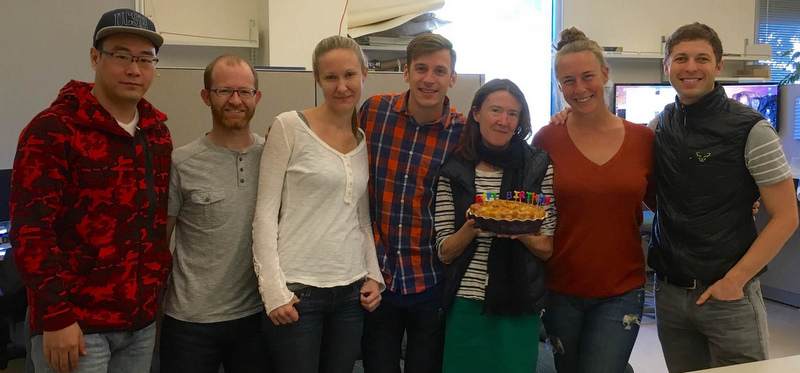
Earlier this month, Tague Team Lab members celebrated Naomi’s birthday. We hope all her birthday wishes come true!
Watershed Science Masterclass Course
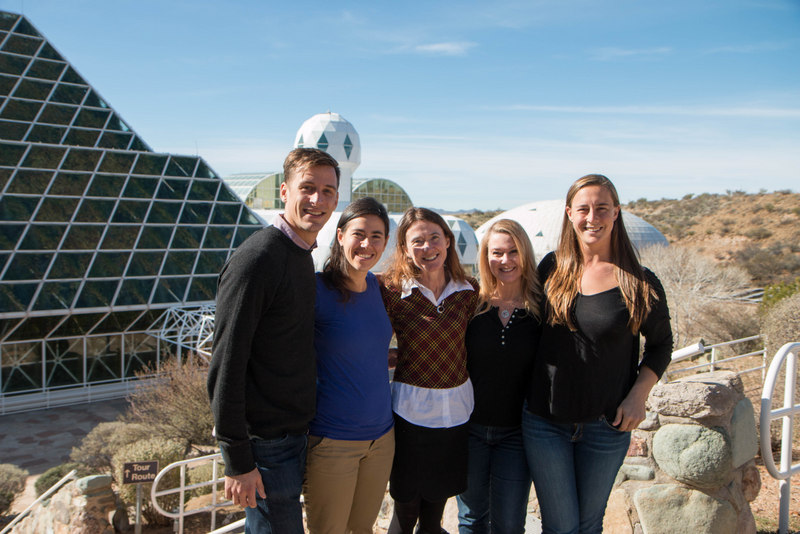
Last month, Naomi Tague taught a section on modeling at the CUAHSI Watershed Science Masterclass held at Biosphere2. Dr. Tague, along with Rick Hooper (CUAHSU), Peter Troch (University of Arizona), Brian McGlynn (Duke university), and Ciaran Harman (John Hopkins University), taught the week-long course focusing on hydrologic and biogeochemical watershed processes, including theory, experimental design, and modeling. Also in attendance from the Tague Team Lab were UCSB Bren PhD student Chris Heckman, UCSB Geography PhD student Katalyn Voss, Berkeley Civil and Environmental Engineering PhD student Gabriella Boisrame, and Tague lab manager Janet Choate.

Biosphere2 overview at sunrise

Naomi Tague and Ciaran Harman in the rainforest biome inside Biosphere2

Gabriella, Janet, Kate, and Chris at one of the experimental hillslopes in the LEO

Kate, Chris, Janet, Naomi, and Gabriella – rainforest biome in Biosphere2

Professors Peter Troch, Naomi Tague, and Rick Hooper
New Publication
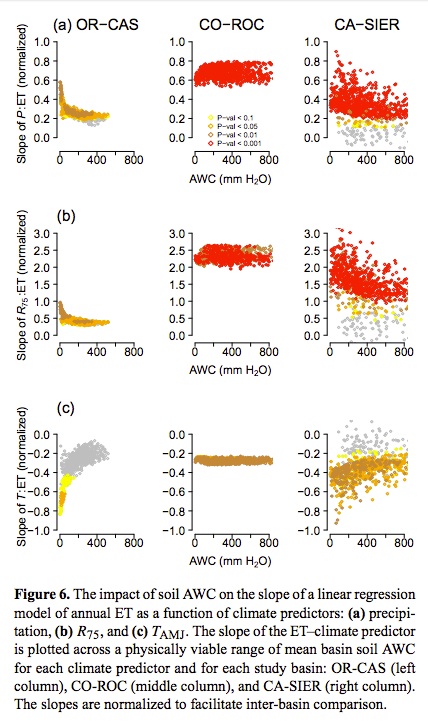
New paper out from Elizabeth Garcia and Naomi Tague:
Garcia, E. S. and Tague, C. L. (2015) Subsurface storage capacity influences climate–evapotranspiration interactions in three western United States catchments, Hydrol. Earth Syst. Sci., 19, 4845-4858, doi:10.5194/hess-19-4845-2015, 2015.
New paper out from lab collaborators

A new paper “Influence of winter season climate variability on snow–precipitation ratio in the western United States”, has just been published by several Tague Team Lab collaborators, including lead author Mohammad Safeeq, a research hydrologist with UC Merced. Safeeq was also interviewed for the UC Merced University News about the research.
Congratulations Dr. Hanan

Last month, PhD student Erin Hanan successfully defended her dissertation “Biogeochemical responses to fire in coastal chaparral ecosystems”. Erin was a student in The Department of Ecology, Evolution, and Marine Biology (EEMB) and is a valuable member of the Tague Team Lab. Dr. Naomi Tague has worked with Erin as a member on her committee and is collaborating on lab related research. Erin’s thesis research focus:
“Fire is a major restructuring force in chaparral and other Mediterranean-type ecosystems. Following fire, heavy winter rains can leach nitrogen (N) into streams, particularly from slopes that have been denuded. The extent to which N is transported from burned slopes to streams depends on how rapidly soil microbes metabolize N into mobile forms such as nitrate and how rapidly recovering plants take up mineral N. This dissertation research combines empirical analyses, remote sensing, and modeling to evaluate how ecosystems recover in the years following fire and how this affects the rates at which N is leached into streams and from watersheds.
Fieldwork focused on how N-retention mechanisms counterbalance post-fire mobilization processes, a point that has not been well studied in chaparral ecosystems. In burned sites, nitrification was significantly enhanced relative to rates measured in unburned sites, however ephemeral herbs established quickly, immobilizing large amounts of N relative to annual net N mineralized. Microbial biomass on the other hand decreased substantially in the first growing season, and remained low through the following year. Laboratory incubations revealed that nitrification increased most rapidly following ammonium addition. When ammonium was sufficiently high, pH determined the relative proportion of inorganic N that was nitrified, while char did not have a strong impact on N cycling. Modeling simulations suggest that N export is highest when fire is followed by drought. This occurs because dry conditions prolong the period during which nitrification is decoupled from plant uptake. Pre-fire drought also increased N loss relative to average conditions because it reduced the recovery rate of post-fire vegetation. These results suggest that climate can regulate N balance by influencing how quickly plants “turn on” and begin to take up nutrients mobilized by fire.”

Erin with her proud parents


Erin with advisor Dr. Josh Schimel and Dr. Dar

Erin with Dr. Carla D’Antonio

Committee member Dr. Dar Roberts signing

Erin “with” Dr. Naomi Tague who attended remotely via Israel where she was on sabbatacal

Advisor Dr. Josh Schimel signing

Committee member Dr. Carla D’Antonio signing
Afforestation in Pyrenees
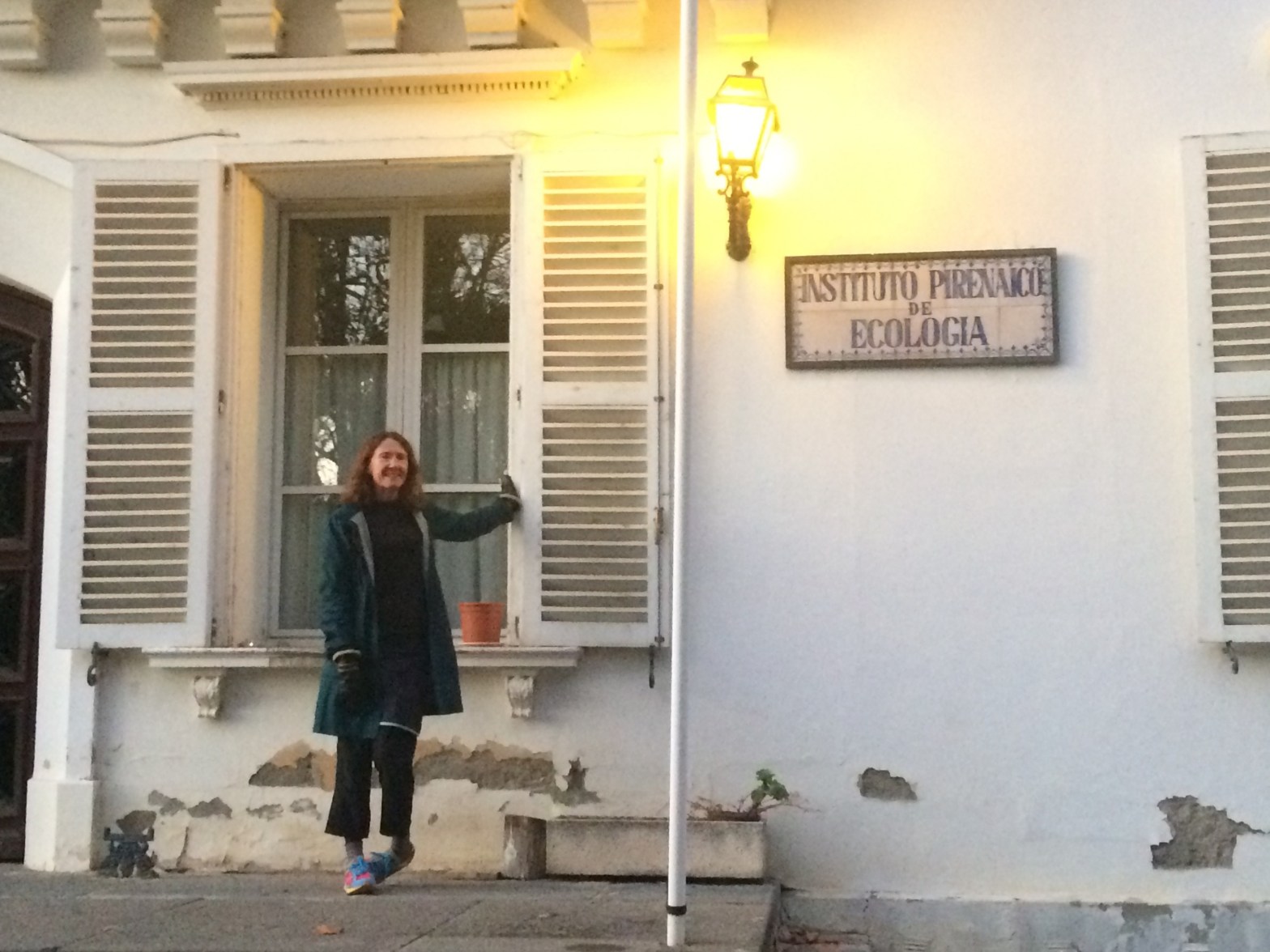
A group at the Instituto Pirenaico de Ecología, Consejo Superior deInvestigaciones Científicas http://www.ipe.csic.es/ in Spain are combining RHESSys and field measurement to investigate how recolonization of pasture by forests in the uplands might influence water availability and sediment production…a complicated setting with some new grasslands/pasture in the low elevations and increasing forest in the upland. Streamflow, groundwater and soil measurements show that changes are due not only to vegetation characteristics (greater transpiration capacity by trees relative to grass) but also due to long term changes in soil drainage and storage characteristics …some pictures from a field site visit this week…
Tague Presentation at Conference on Forest Fire
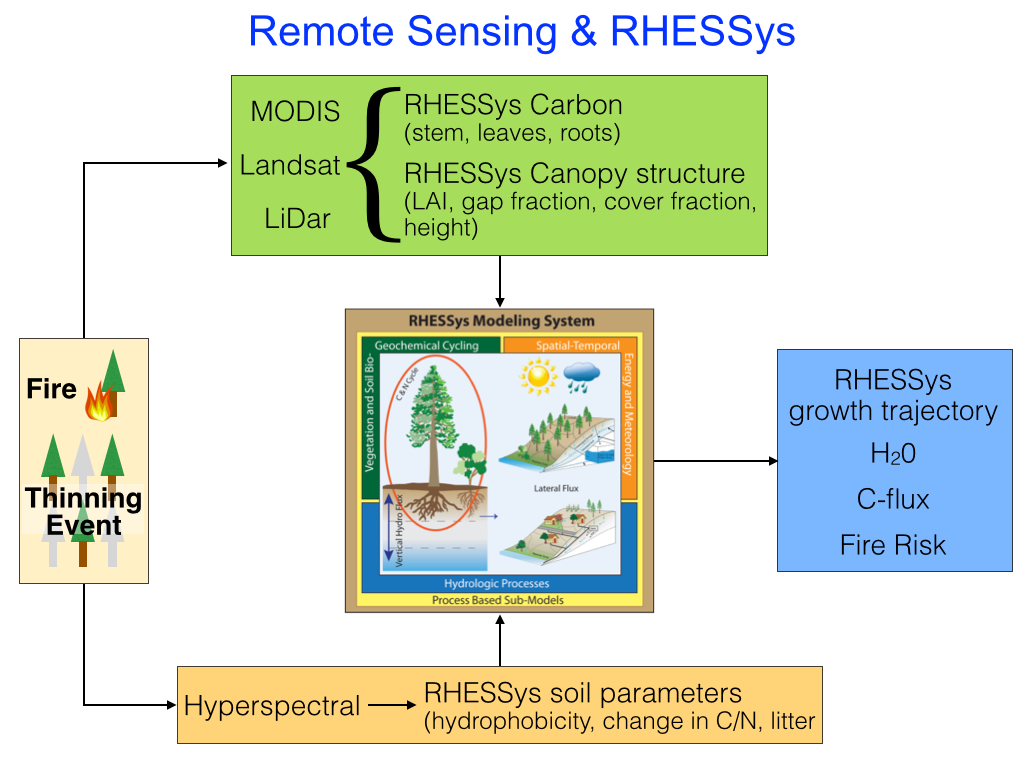
Dr. Tague presented “Modeling the complex interactions among wildfire, fuel treatments and hydrology” at the 10th EARSeL Forest Fire Special Interest Group Workshop held Novemeber 2-5 in Limassol, Cyprus.
FFSIG (Forest Fire Special Interest Group) Conference Website
European Association of Remote Sensing Laboratories (EARSeL)

Presentation Figure

Naomi on the Caledonia Trail in Cyprus
 The Tague Team Lab