Featured

Welcome to the Tague Team Lab at UCSB!

The Tague EcoHydrology lab focuses on watershed research, addressing the feedbacks among terrestrial vegetation, surface hydrological processes, and atmospheric conditions. We use a variety of techniques to examine the impact of changes in climate and land use on ecosystem health and water resources.
Please scroll through our blog below to see what we’ve been up to!

All are welcome to attend our weekly lab meetings and take part in presentations and scientific discussions. See our Lab meeting schedule & events page for information on each week’s topic or presenter. Meetings are held in the Bren hall lab wing, room 1005.

Seeing the Unseen: New Frontiers in Dynamic Water Storage and Modeling

This review shows that water storage capacity in the critical zone can change on climate-relevant timescales, yet remains difficult to measure and model—especially in the subsurface. Advances from long-term observatories and field campaigns are improving how we observe storage filling, draining, and connectivity, but spatial heterogeneity and evolving capacity still challenge models. The authors argue progress requires a three-part approach: improved observations, updated conceptual models to guide where and how we measure, and physically based numerical models to test new hypotheses. Bridging field science and modeling—and improving how we integrate knowledge across disciplines—will be key to predicting future water availability for ecosystems and people.

Tague, C., Barnard, H. R., Harpold, A. A., Heckman, C. J., Johnson, K., Knowles, J. F., Lininger, K. B., Lowman, L. E. L., Navarre-Sitchler, A., Parrish, E., Singha, K., Sullivan, P. L., & Warix, S. (2025). James Buttle Review: Dynamic water storage shapes critical zone function in snow-dominated mountain watersheds. Hydrological Processes, 39(11), e70325. https://doi.org/10.1002/hyp.70325

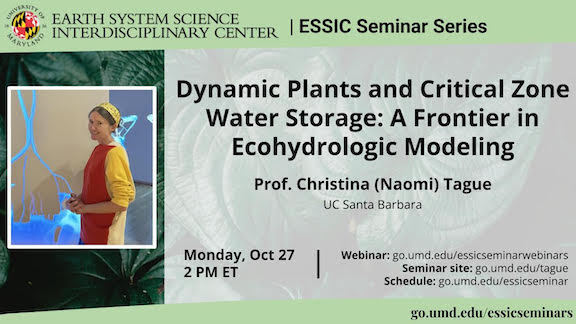
Tague Webinar Presentation: A Frontier in Ecohydrologic Modeling

Earth System Science Interdisciplinary Center Seminar Series

Invited Speaker: Professor Naomi Tague
Talk Title: Dynamic Plants and Critical Zone Water Storage: A Frontier in Ecohydrologic Modeling
Date: Monday, October 27
Time: 2:00 PM (Eastern Time)

All are welcome to attend this invited seminar featuring Dr. Naomi Tague, who will discuss advances in ecohydrologic modeling that link dynamic vegetation processes with critical zone water storage.

Webinar link
Zoom Meeting ID: 918 7733 3086
Zoom password: essic
To join the audio conference only: US Toll: +13017158592
Global call-in numbers

Abstract:
Modeling vegetation within hydrologic systems has advanced well beyond early “green slime” representations where vegetation was treated as a static, one-dimensional driver of evapotranspiration. Modern ecohydrology models now represent vegetation as dynamic, sessile organisms that adapt to their environment—through short-term processes such as stomatal regulation and longer-term processes such as strategic carbon allocation to growth. Recent advances also integrate disturbance processes such as fire, allowing us to explore how vegetation actively co-evolves with hydrologic and disturbance regimes.

In this talk, I illustrate how these new classes of models reveal the critical feedbacks between vegetation water use, plant responses to water availability, and the storage capacity of the critical zone. Simple models show that water storage exerts a nonlinear, climate-specific influence on evapotranspiration. More complex models suggest that subsurface storage capacity mediates forest disturbance impacts on transpiration and recovery. Quantifying when and where variation in storage capacity matters provides new insight—but also exposes ongoing challenges in estimating and conceptualizing storage itself. This frontier invites closer synthesis between ecohydrology, geophysics, and plant physiological theory to better understand how dynamic plants shape, and are shaped by, the critical zone.

Biosketch:
Christina (Naomi) Tague’s research uses advanced data science and modeling to understand ecohydrology in a rapidly changing world. She studies how shifts in water availability affect both ecosystems and people—shaping fires, floods, droughts, and the health of rivers and groundwater. Her lab develops simulation models that integrate field, lab, and remote-sensing data to create “virtual laboratories” for exploring what-if scenarios: How will warming affect mountain water supplies? How do vegetation types in green infrastructure influence water and nutrient cycles? How do fuel treatments alter fire severity? Recently, her group has focused on linking Earth system models with interactive visualization tools to advance science communication and decision-making.

How do trees and snowpack co-evolve following disturbance? New publication

This new publication sheds light into the coevolution of montane forests and snowpack response to forest treatments through the coupling of the process-based snow model SnowPALM and the ecohydrological model RHESSys.

Krogh, S.A., Graup, L., Tague, C., Broxton, P., Boisrame, G., Scaff, L., Harpold, A. A. (2025) Forest Regrowth Impacts on High-Resolution Snowpack Modeling: A Proof-of-Concept in a Mediterranean Montane Catchment, Journal of Hydrology 660, 133426. doi: 10.1016/j.jhydrol.2025.133426, Available at SSRN: https://ssrn.com/abstract=4969117

Tague & Turpin Wildland Lecture

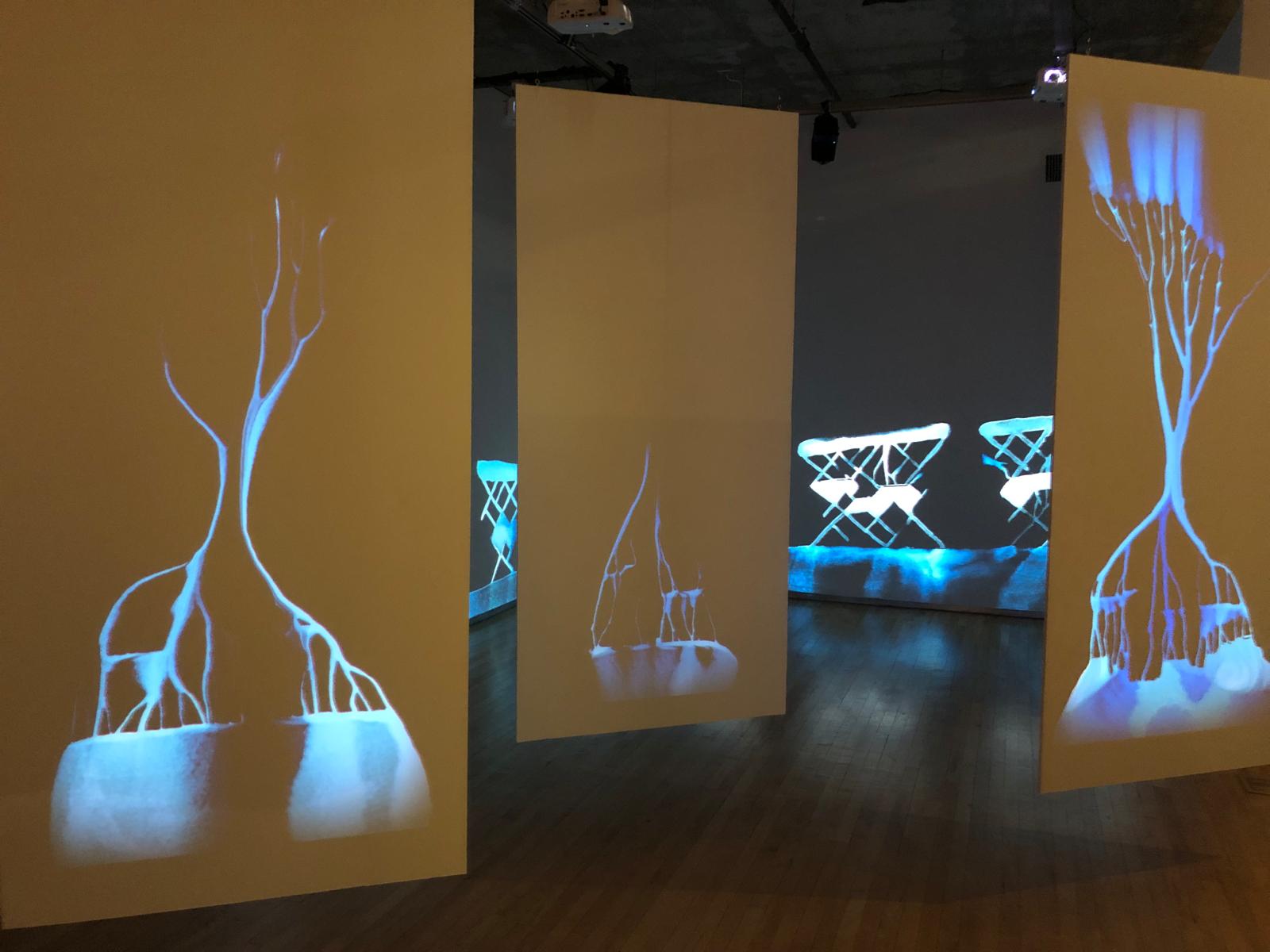
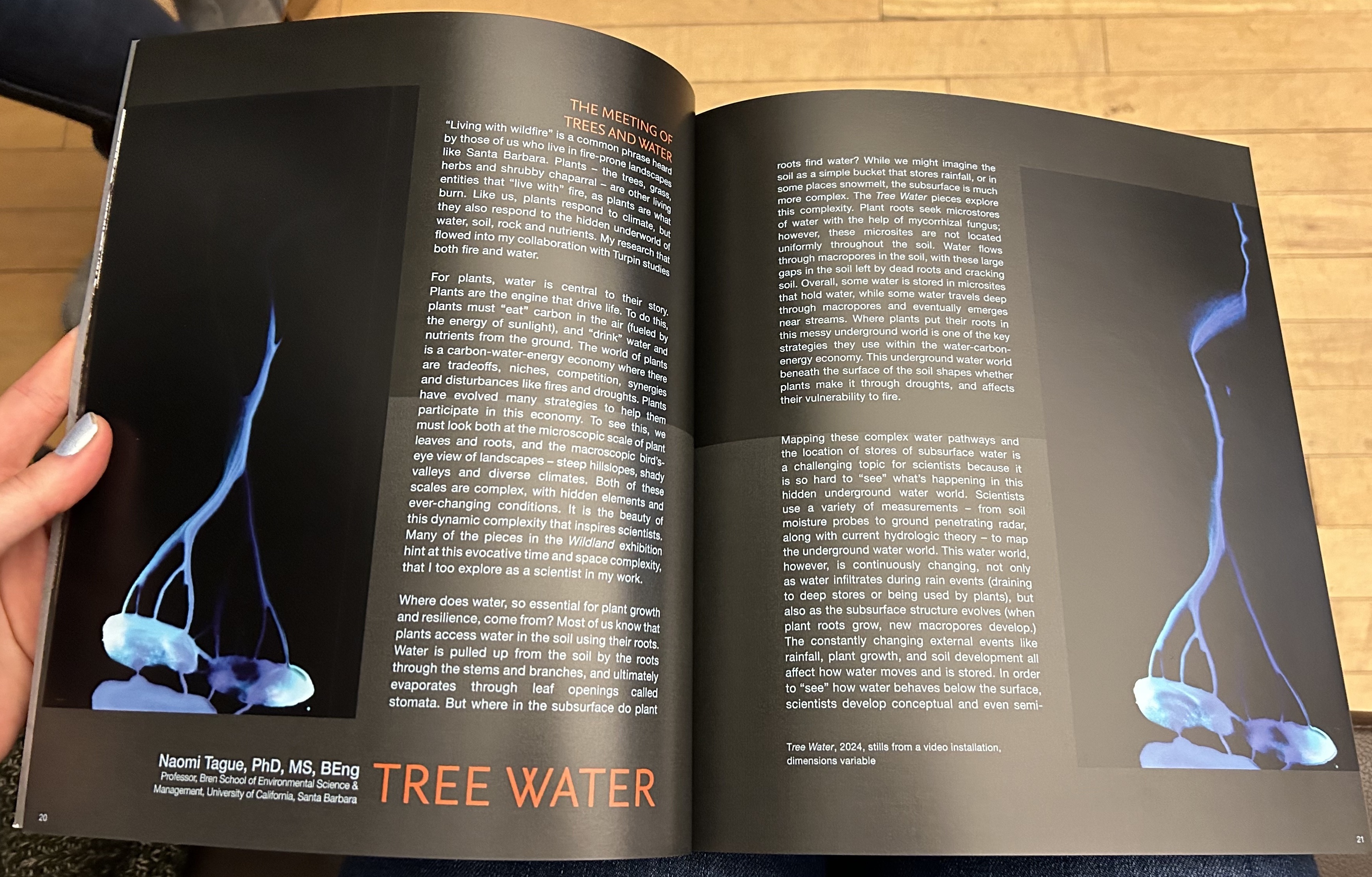
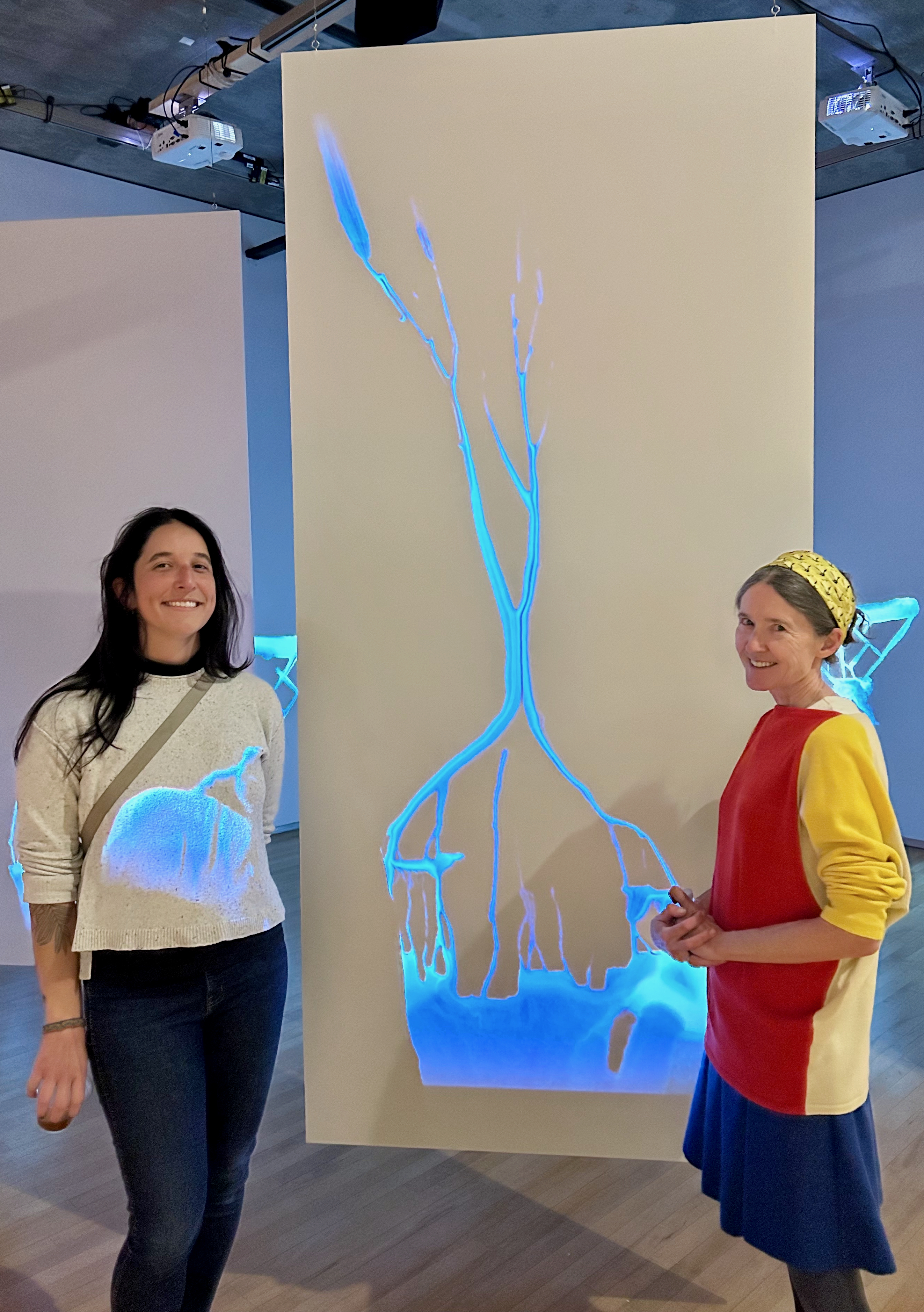
This Thursday, artist Ethan Turpin and UCSB professor Naomi Tague will present a free public lecture on their collaborations for WILDLAND – how they developed the concept and linked art and science to create visualizations and experiences to help make sense of our complex, changing environment and humanity’s relationship with it.

When: January 30, 2025 at 5:30 – 7:30pm
Where: Westmont College, Adams Center, Classroom 216

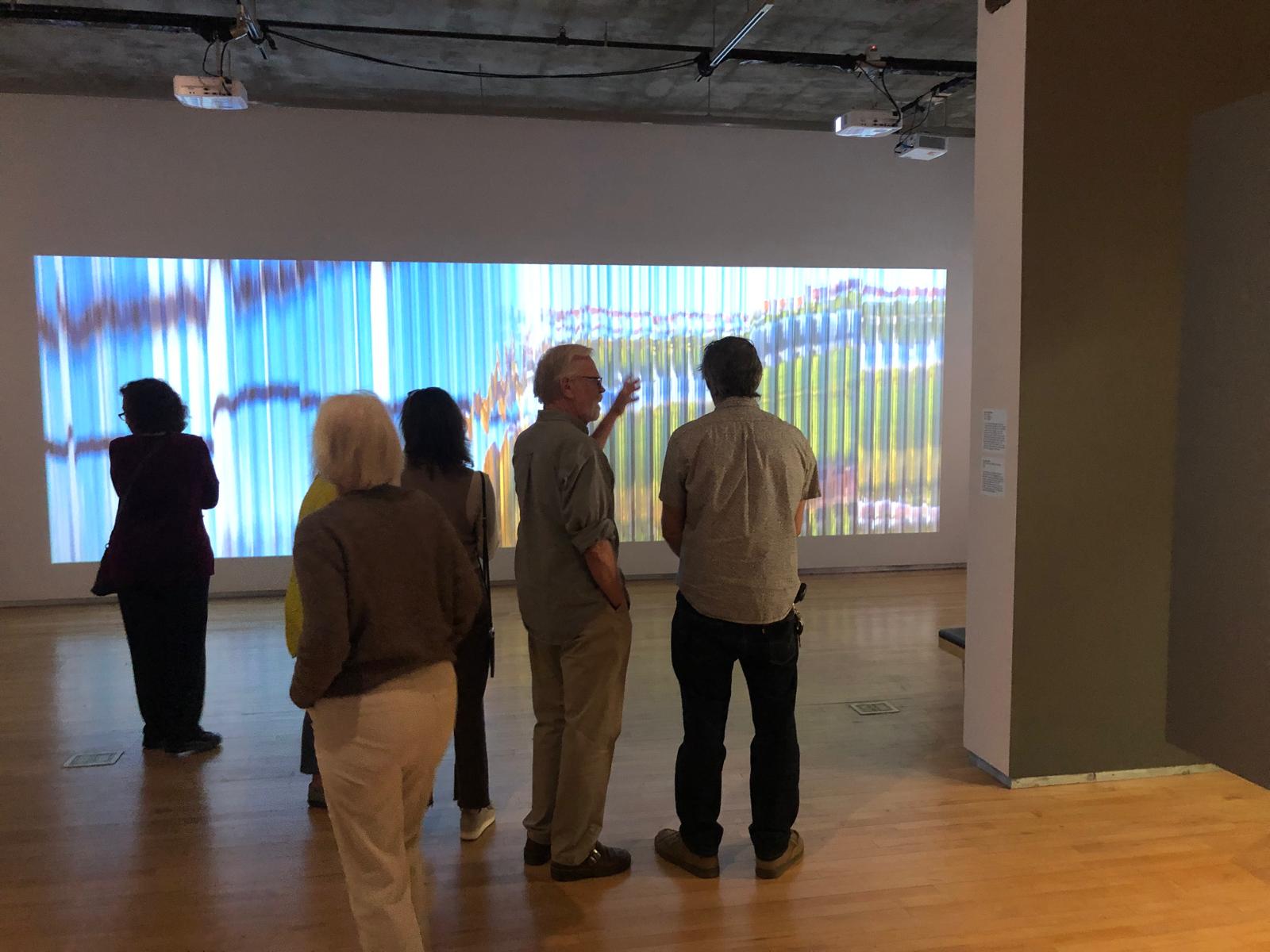
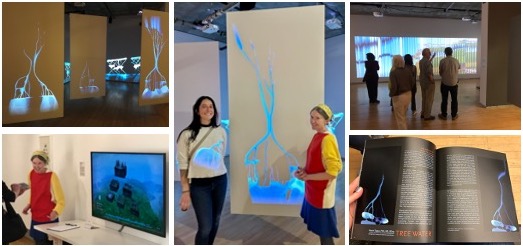
Include time to also visit the exhibit at the Westmont Ridley-Tree Museum of Art, and explore a wide range of immersive and participatory media designed to communicate the complex relationships between fire, water, and humanity. Multimedia creations allow visitors to experience the natural cycles of wildfire, devastation, recovery and regrowth.

Timelapse videos allow visitors a view inside wildland fire.

See the kind of educational media developed by artist Ethan Turpin in collaboration with Naomi Tague and other scientists, researches, and educators at The Burn Cycle Project

Users can explore how different climate scenarios may impact landscapes over time within a 3D interactive visualization – “Future Mountain” – designed to help understand the complex interactions between fire, water, and climate.

Wildland Exhibit Events

Opening night reception for the Wildland exhibit was a success – be sure to visit through
March 22, 2025.
Don’t miss the following upcoming exhibit events:

Artist & Collaborator Talk
When: January 30, 2025 at 5:30pm
Where: Adams Classroom 216, Westmont College
Artisit Ethan Turpin and UCSB professor Naomi Tague will present a lecture on their collaborations for WILDLAND – how they developed the concept and linked art and science to create visualizations and experiences to help make sense of our complex, changing environment and humanity’s relationship with it.

Ember Trees
When: Thursday, February 20, 2025 at 6pm
Where: Grove of Stone Pines in the Westmont College Formal Gardens

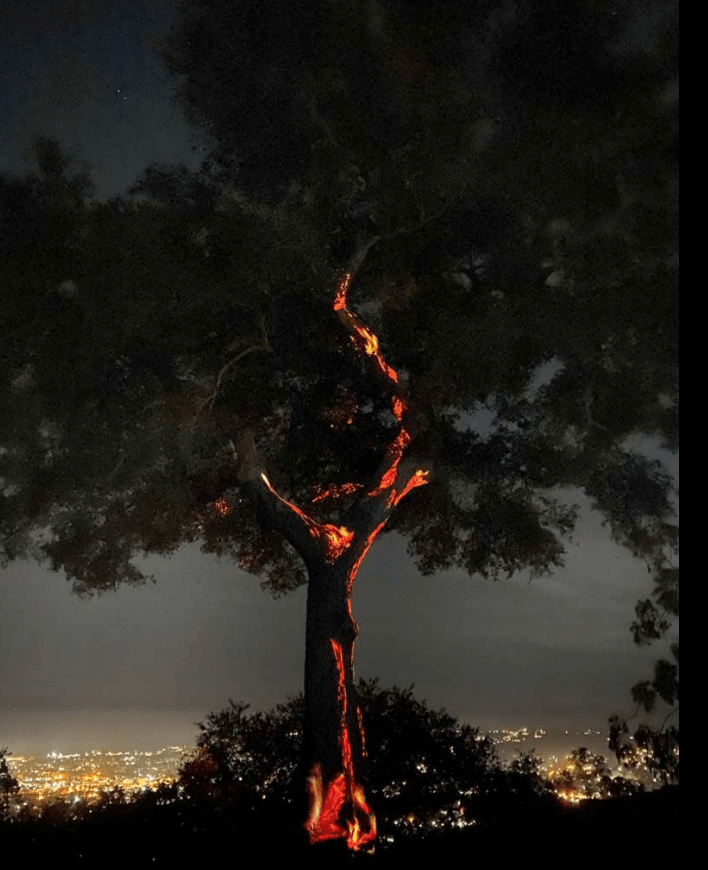
A special, site-specific installation event featuring glowing ember trees, testimonials from firefighters and community members, a poetry reading by former Santa Barbara Poet Laureate Paul Willis, and a special musical piece by Westmont Director of Choral Activities Daniel Gee. The installation is created by Ethan Turpin and Jonathan PJ Smith of The Environment Makers. Using multiple video projectors and mapped footage of glowing embers, Turpin and Smith make trees appear as though glowing with fire from within. The installation site will be a grove of pine trees scarred from the 2008 Tea Fire, located east of the Museum by the Dining Commons.

Family Day
When: Saturday, March 1, 2025 from 11am-5pm
Where: Adams Center, Westmont College

A free, all-ages event for families, students, and the entire community to experience the WILDLAND exhibition. Visit the Museum to see interactive and immersive video installations of wildfire and water systems, then make your way over to the Adams Center to create sustainable arts-and-crafts projects. Visit educational workshops and tables from local organizations like the Museum of Natural History and the Santa Barbara County Fire Safe Council, see the inside of a fire truck and talk with firefighters; relax by watching a nature documentary in Porter Theatre, then grab a bite to eat from our community BBQ. There’s something for everyone!

Wildland Exhibit – featuring ‘Future Mountain’

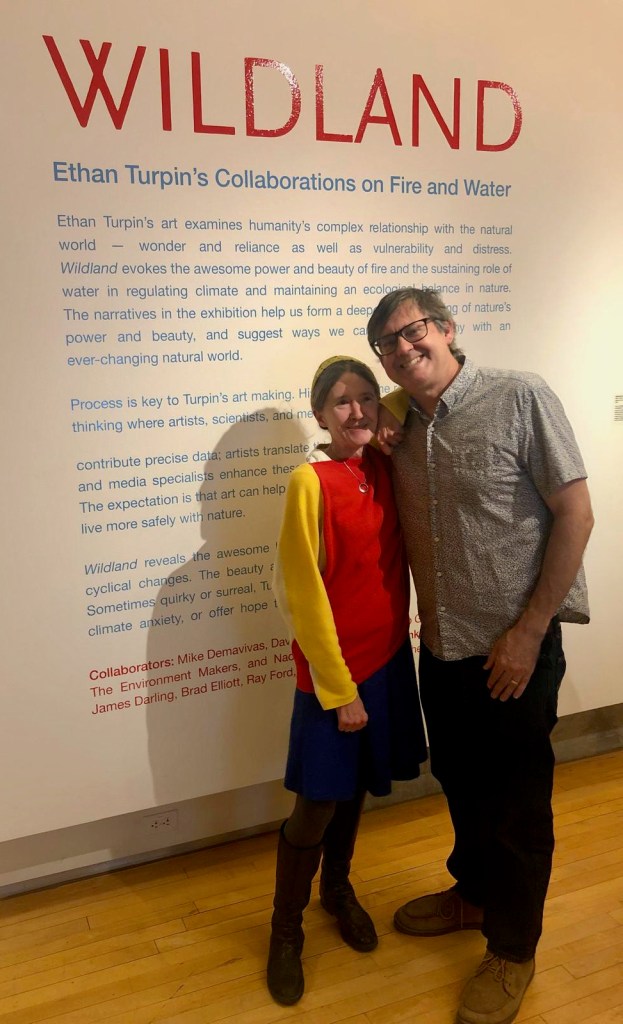
Westmont College Exhibit Announcement: “WILDLAND: Ethan Turpin’s Collaborations on Fire and Water

Westmont College is hosting the thought-provoking exhibit “WILDLAND: Ethan Turpin’s Collaborations on Fire and Water”, running from January 9 to March 22, 2025. This unique exhibit showcases artistic explorations of critical environmental issues, including the natural cycles of wildfire, devastation, recovery and regrowth.

A featured highlight of the exhibit is “Future Mountain: An Interactive Fire, Water, & Climate Model“, a collaborative work by Professor Naomi Tague and artist Ethan Turpin, blending art and science to deepen our understanding of how landscapes work over cycles of fire and water.

Join us for the Opening Night Reception on Thursday, January 9, from 4:00 PM to 6:00 PM.
Westmont Ridley-Tree Museum of Art
955 La Paz Road
Santa Barbara, CA 93108

In addition, Naomi Tague and Ethan Turpin will present a lecture on their collaboration and creative process on January 30, 2025 at 5:30 (Adams Classroom 216, Westmont College).

Don’t miss this exciting opportunity to experience the intersection of art, science, and environmental awareness.

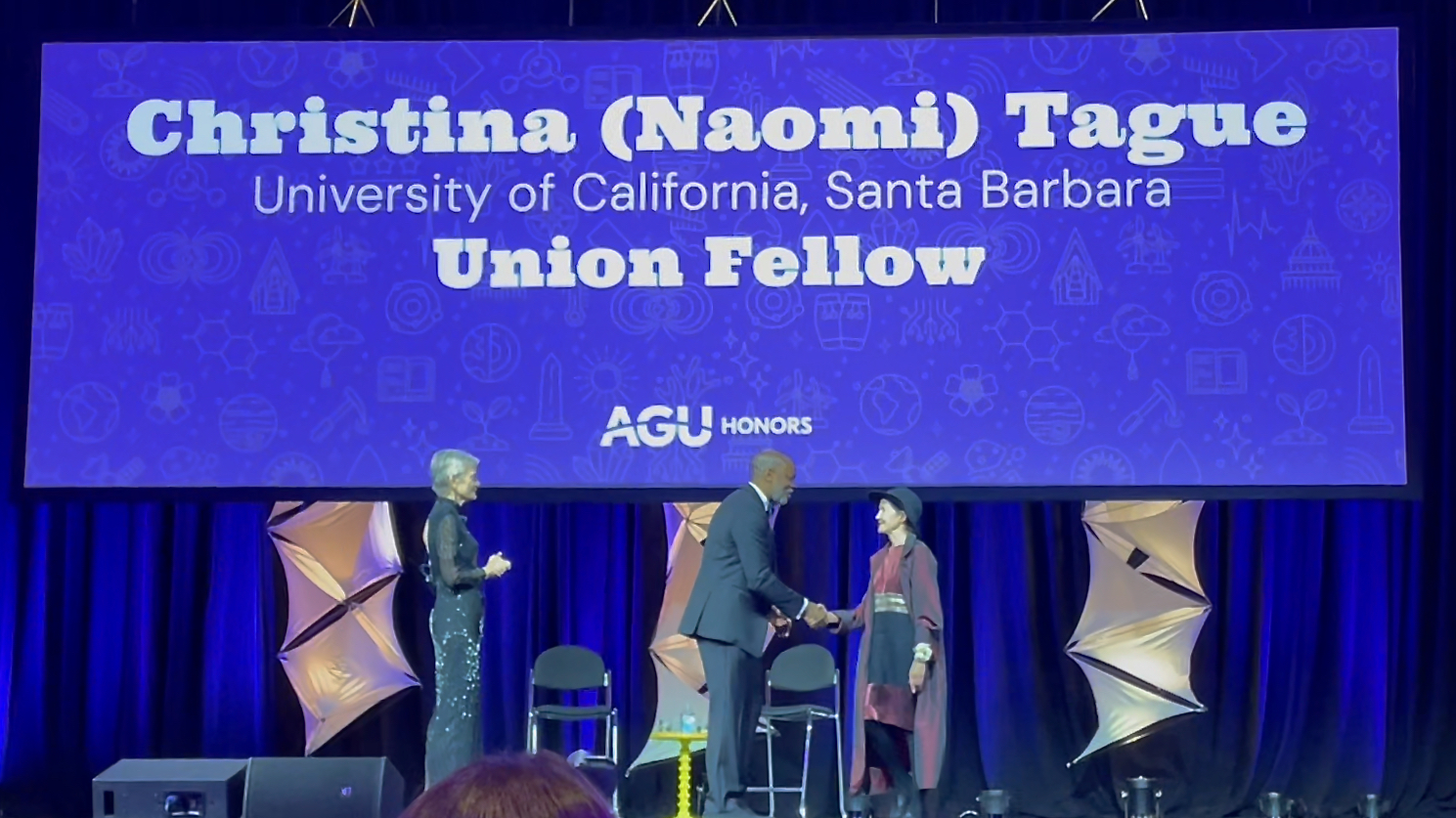
Tague AGU Fellowship Award

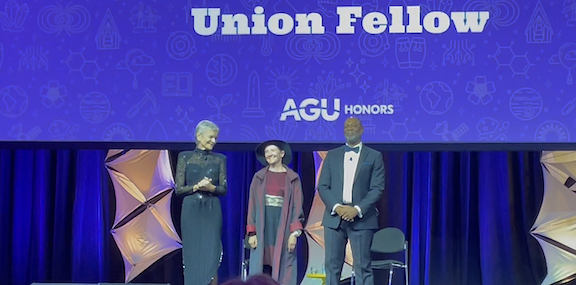
At the 2024 AGU conference in Washington DC, Dr. Naomi Tague received an American Geophysical Union Fellowship Award in recognition of her exceptional achievements in research for advancing understanding, prediction, and integration of ecohydrological processes, feedbacks, and coevolution over a range of watershed scales. Dr. Tague’s recognition at the Award Ceremony can be seen at time 49.26.
Congratulations Naomi and well deserved!

AGU 2024 Representation

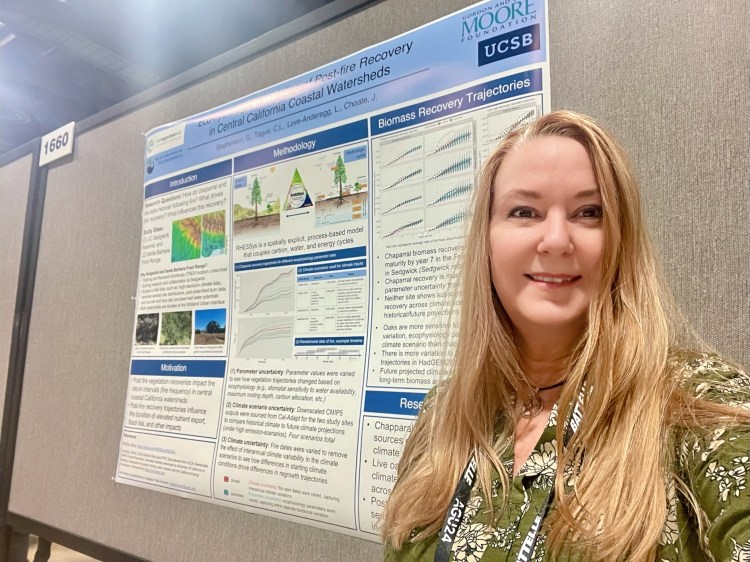
Research using RHESSys presented at the 2024 AGU Conference in Washington DC, as well as presentations by Tague Team Lab colleagues and collaborators.

RHESSys
Grace Stephenson, Naomi Tague, Janet Choate – UC Santa Barbara
Eco-hydrological Modeling of Post-fire Recovery in Central California Coastal Watersheds

Lawrence E Band, Rouyu Zhang, Daniel Pelletier – University of Virginia
Patterns and Pathways to Equitable Ecohydrologic Evolution in Urban Watersheds

Tejendra Kandel, Ruoyu Zhang, Conghe Song, Lawrence Band – University of Virginia
Ecohydrological Impacts of Forest Management in the Saradha Khola Watershed, Western Nepal: Insights from RHESSys Modeling

Ruoyu Zhang, Lawrence Band – University of Virginia
Prediction of spatiotemporal patterns of denitrification in a suburban watershed using a Encoder-Decoder network

Hanne Borstlap, Lawrence Band, Qingguang Zhu, Patricia Wiberg –
University of Virginia
Surging Seas and Saline Soils: Coupled Coastal Surge and Terrestrial Ecohydrology to Assess Soil salinization

Asim Zia, Panagiotis Oikonomou, Patrick Clemins, Andrew Schroth – University of Vermont
Co-producing hydroclimatic forecasts and evaluating their impact on nutrient budgeting and abatement costs for securing clean water in transboundary Missisquoi bay of Lake Champlain, 2000-2050

Daniel Pelletier, Lawrence Band, Ruoyu Zhang – University of Virginia
Improving Rainfall-Runoff Simulations with a Coupled Eco-hydrological and Hydrodynamic Modelling Approach

Collaborators
Nicole Hornslein, et al. – University of Colorado Boulder
Gordon Gulch (CO, USA): A Phenomenal Testbed for Advancing Critical Zone Science

Annette Elizabeth Hilton, et al. – University of California Santa Barbara
Rescuing Historical Water Data–Machine Learning for Data Digitization of the U.S. Geological Survey Archives

Former Tague Team Lab students
Aubrey L Dugger, et al. – National Center for Atmospheric Research
Integrated Modeling to Assess Delaware River Basin Water Resource Vulnerability to Drought

Christopher Heckman – Wake Forest University
How uncertainty in data products influences estimates of root zone water storage capacity by altering observed climate

Dr. Naomi Tague receives 2024 AGU Fellowship Award

Professor Christina (Naomi) Tague has been named a 2024 Fellow by the American Geophysical Union (AGU – the world’s largest Earth and space science association). This prestigious recognition is awarded to individuals who have made exceptional contributions to earth and space sciences.

Professor Tague’s scientific contributions have gained international recognition for her cutting-edge research in hydrology, ecohydrology, watershed modeling, and scientific visualization – and she has demonstrated extraordinary leadership in fostering interdisciplinary collaboration. Her work bridges the fields of hydrology, ecology, environmental science, eco-informatics, and art, bringing together researchers and policymakers to solve real-world problems.

This award not only recognizes her outstanding scientific and professional achievements but also her dedication to advancing the field of ecohydrology and making a lasting impact on environmental science.

UCSB’s The Current recognizes Dr. Tague and the other UCSB faculty and student honorees

Retaining snow & increasing baseflow to counteract rising stream temperatures

This study explores how climate and geology will affect future stream characteristics during the ecologically stressful summer months – and how land management activities that increase water storage as snow and groundwater while decreasing evapotranspiration may help mitigate some of the effects of climate change, especially in more arid watersheds.

Boisramé, G., Harpold, A., Tague, C. (2024) Relationships between snowpack, low flows and stream temperature in mountain watersheds of the US west coast, Hydrological Processes 38(5), e15157. https://doi.org/10.1002/hyp.15157