

Dr. Erin Hanan gave the invited talk “Nitrogen cycling and export in California chaparral: the role of climate in shaping ecosystem responses to fire” at the Natural Areas Conference: Climate Change Adaptation and Natural Areas Management: Turning Words to Action, held at UC Davis Oct. 19 – 21, 2016.
Chaparral growth-ring analysis as an indicator of stand biomass development

Recent publication in International Journal of Wildland Fire.
Vegetation change may have a greater impact on the amount of stream flow in the Sierra than the direct effects of climate warming

New publication in Plos One from Tague Team Lab member Ryan Bart with Naomi Tague and Max Moritz. The RHESSys model was used to examine the effects of tree-to-shrub type conversion, in combination with climate change, on streamflow in two lower montane forest watersheds in the Sierra Nevada.
Key ecological responses to nitrogen are altered by climate change
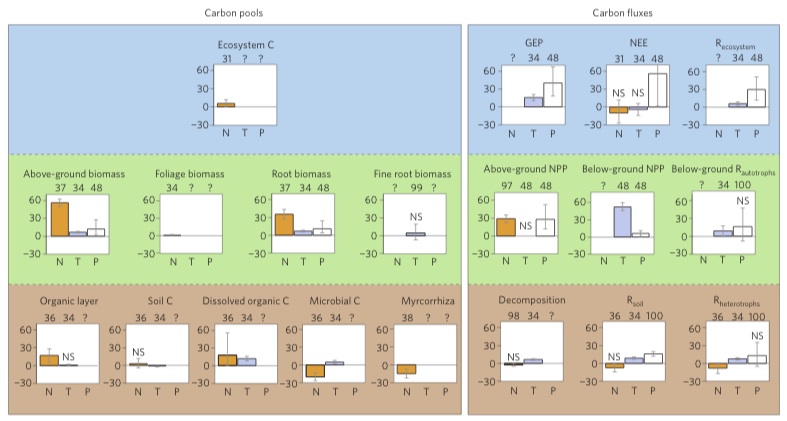
Naomi Tague was a collaborator with others on a new publication in Nature Climate Change that reviews how climate change alters key processes in terrestrial and freshwater ecosystems related to nitrogen cycling and availability, and the response of ecosystems to nitrogen addition in terms of carbon cycling, acidification and biodiversity.
T. L. Greaver, C. M. Clark, J. E. Compton, D. Vallano, A. F. Talhelm, C. P. Weaver, L. E. Band, J. S. Baron, E. A. Davidson, C. L. Tague, E. Felker-Quinn, J. A. Lynch, J. D. Herrick, L. Liu, C. L. Goodale, K. J. Novak and R. A. Haeuber (2016) Key ecological responses to nitrogen are altered by climate change, Nature Climate Change vol. 6,DOI: 10.1038/NCLIMATE3088
Tague Team Lab members at CZO meeting
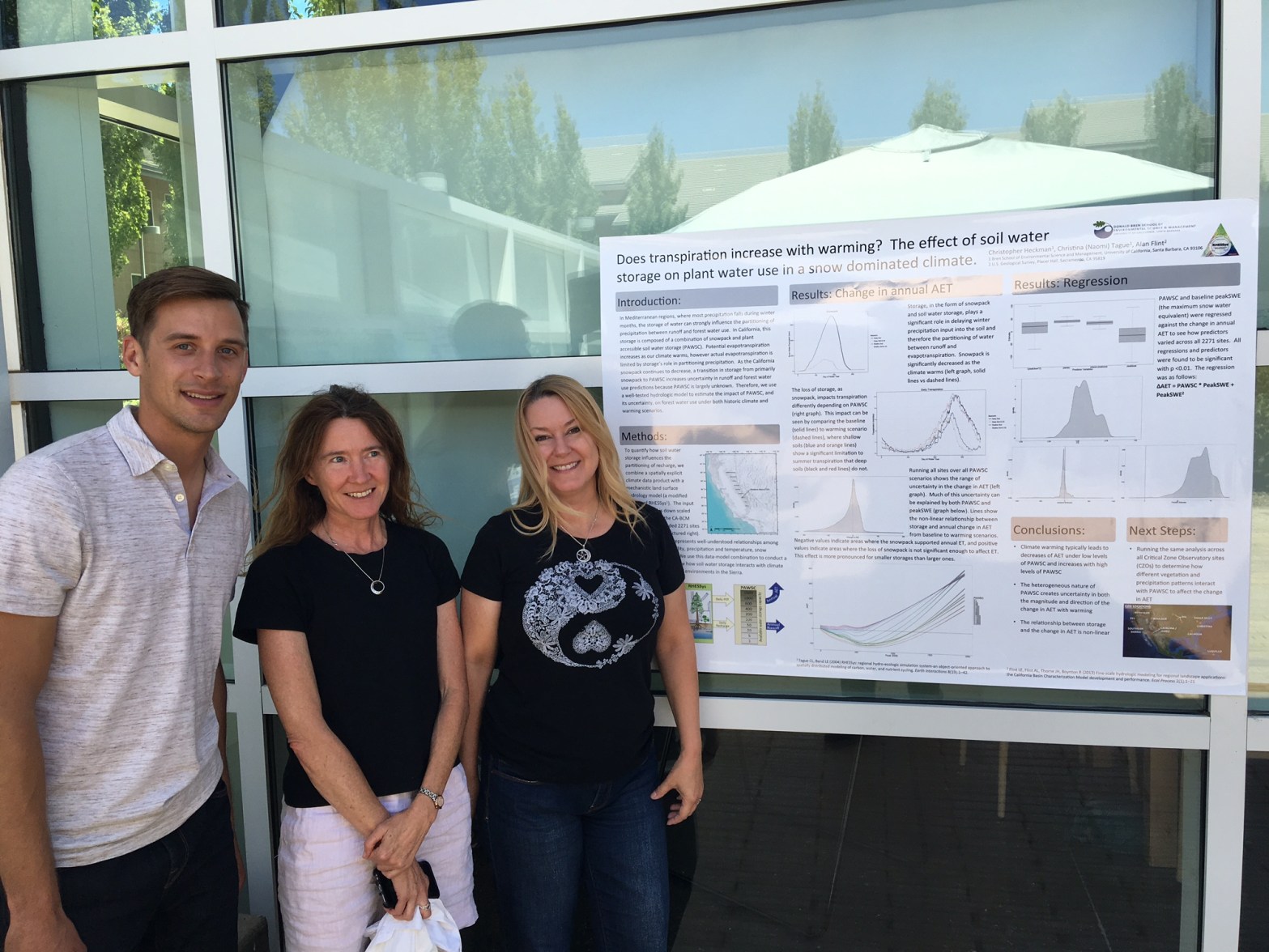
Tague Team Lab members Naomi Tague, Chris Heckman, and Janet Choate attended the 2016 SSCZO (Southern Sierra Critical Zone Observatory) team meeting this week at UC Merced. Ongoing work from our lab was represented:
Naomi Tague: presentation on Eco-Hydrology and the CZO
Chris Heckman: poster ‘Does transpiration increase with warming? The effect of soil water storage on plant water use in a snow dominated climate’
Janet Choate: poster ‘Seeing the water in the trees: Challenges in estimating the impact of fuel treatments and fire on hydrology’
Ryan Bart: (unable to attend meeting but poster was presented) ‘An integrated model for identifying linkages between the management of fuel treatments, fire and ecosystem services’
How fine scale topography influences streamflow..
Kyongho Son and others publish a paper in WATERS that shows how fine scale topography influences streamflow – and other ecosystem functions such as forest productivity – Accounting for fine scale topography (5m-10m) in hydrologic models alters estimates of how climate variability influences estimates of productivity – by accounting for the role played by micro-refugia
http://www.mdpi.com/2073-4441/8/8/321/html
Lab members at CUAHSI

Tague Team Lab members Dr. Naomi Tague and PhD student Chris Heckman, as well as former lab member Kyongho Son (now a Postdoctoral Fellow with the Research Foundation of The City University of New York) are attending the CUAHSI Biennial Colloquia on Water Science at the National Conservation Training Center in Shepherdstown, West Virginia this week. The theme for the 2016 meeting is “Finding Your Place in Big Data: Using Observations to Understand Hydrologic Processes for Predicting a Changing World”.
Tague presents: Seeing the water in the trees: Challenges in estimating the impact of fuel treatments and fire on hydrology
Heckman presents: How climate change could affect the spatial pattern of transpiration due to uncertainty in plant accessible soil water storage, in a Mediterranean environment
Son presents: The relationship of dissolved organic carbon to catchment characteristics in the Neversink River Basin, New York
at the CUASHI Biennial

Kyongho Son (former lab member) taking a break from all the hydrologic science at #CUASHI


Congratulations to newly minted Dr. Colin Bell

Colin Bell – key lab collaborator – and developer of the new storm water management – algae model in RHESSys – successfully defended his dissertation
at Purdue University
INFLUENCE OF STORMWATER CONTROL MEASURES ON WATERSHED HYDROLOGY AND BIOGEOCHEMICAL CYCLING
Congratulations Dr. Tague!
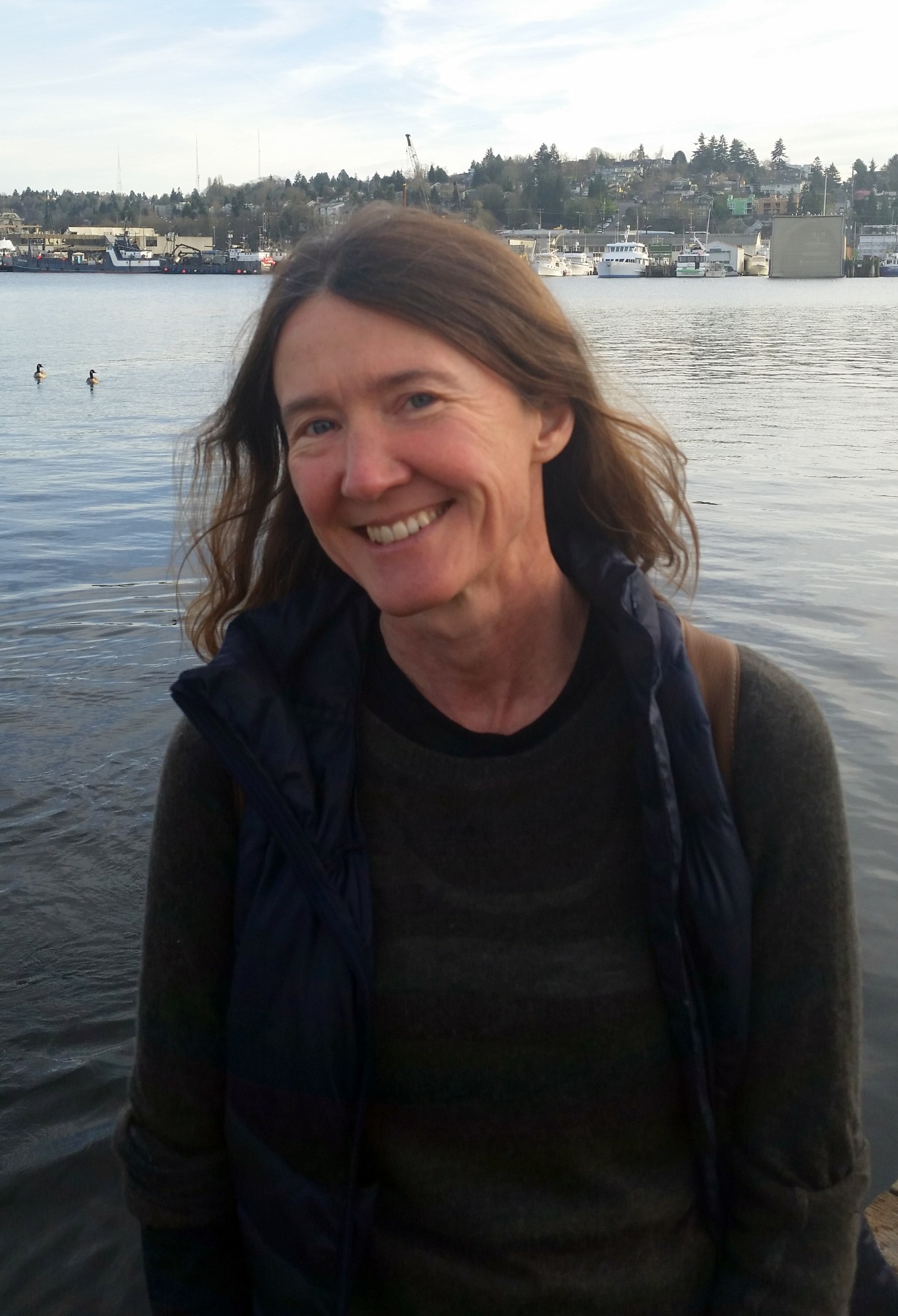
Congratulations to Dr. Naomi Tague who received her official promotion to full professor today!
 The Tague Team Lab