
Tague quoted in local paper
Dr. Naomi Tague was quoted in an article appearing in the Santa Barbara Independent. The article “Plants and Animals Are Dying for a Drink” appearing in today’s paper discusses drought impacts on local plants, animals, and even economics. Author Tyler Hayden even quotes Tague in the final words of the article – ‘As Tague put it, “What we really should worry about are future droughts.”’
Read the article


Naomi interviewed about tree death factors
Naomi Tague was interviewed on Jefferson Public Radio, broadcast on NPR, regarding tree death factors in California – research that was recently published in New Phytologist: “Tree mortality from drought, insects, and their interactions in a changing climate” on which Naomi was a co-author.
Listen to the discussion

Dr. Tague interviewed on JPR
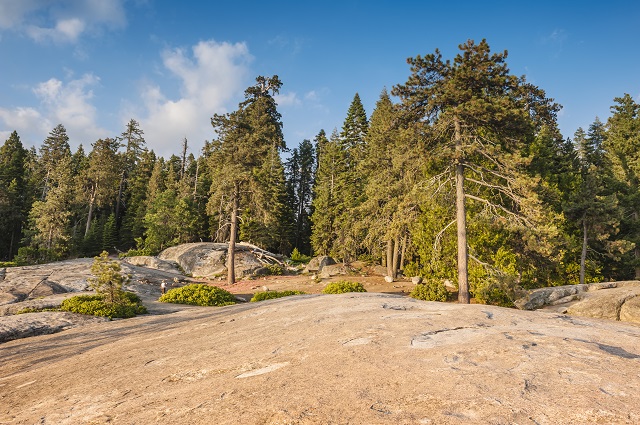
 Naomi Tague was interviewed on Jefferson Public Radio (broadcasted on NPR) regarding tree death factors in California. This research was recently published in New Phytologist: “Tree mortality from drought, insects, and their interactions in a changing climate” on which Naomi was a co-author.
Listen to the discussion
Read the paper
Dr. Tague interviewed on AZoCleantech


Naomi (Christina) Tague was interviewed on AZoCleantech by Alessandro Pirolini, editor of the AZoNetwork, regarding North American forest die-offs that have occurred in recent years. In the interview, Naomi discusses causes and prevention, and the research that grew out of the NCEAS working group and the recent publication that came from that research, “Tree mortality from drought, insects, and their interactions in a changing climate.”

Dr. Tague interviewed on NPR

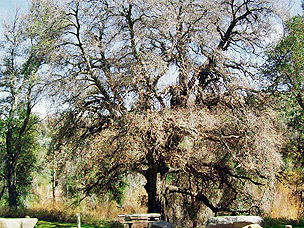 Naomi Tague was interviewed by KCLU’s Lance Orozco about drought and tree mortality in California. The interview comes just after the recent publication in New Phytologist, which Dr. Tague is a co-author – “Tree mortality from drought, insects, and their interactions in a changing climate”. The interview was broadcast on National Public Radio on Friday, June 12.
New Publication & Press Release
Dr. Tague, as a member of UC Santa Barbara’s National Center for Ecological Analysis and Synthesis (NCEAS), collaborated on a new publication that will appear in New Phytologist this month (an early view of the publication is now available online), “Tree mortality from drought, insects, and their interactions in a changing climate”. The study examines the interactions between drought and insects, and their impact on forest health. Dr. Tague appears in a UCSB press release highlighting the study’s research.
Access the paper
UCSB Press Release
NCEAS


New Publication Accepted!
New publication accepted to Ecohydrology: Peng, H., Tague, C., and Jia, Y. Evaluating the eco-hydrological impacts of reforestation in the Loess Plateau, China using an eco-hydrological model. Access online
Dr. Tague collaborated with PhD student Hui Peng (Key Laboratory of Marine Environment and Ecology, Ministry of Education, Ocean University of China, Qingdao, China), using RHESSys to examine the eco-hydrologic responses to reforestation in two neighboring catchments in the Loess Plateau of China. Hui spent some time in the Tague Team Lab in 2012 as a visiting PhD student.

(FC – forested catchment; CC – control catchment)
Joint Assembly Presentation
Dr. Naomi Tague was invited to present “Watering Urban Vegetated Patches: Computing Ecologically Useful Runoff Subsidy” at the 2015 AGU Joint Assembly annual meeting (Society partners: American Geophysical Union, Canadian Geophysical Union, Geological Association of Canada, and the Mineralogical Association of Canada) that took place in Montreal Canada May 3-7, 2015.

Naomi interviewed on People behind the science
Naomi was interviewed on People behind the Science – where the lives and experiences of the people behind the research and scientific discoveries of today are explored. These podcasts provide access to engaging science stories, amazing insights, seasoned science career advice, and fascinating science research.
Listen to the podcast Scientific Simulations in Stream and Ecosystem Synergies

 The Tague Team Lab